RPZ vs. Double Check: Backflow Preventer Types Explained
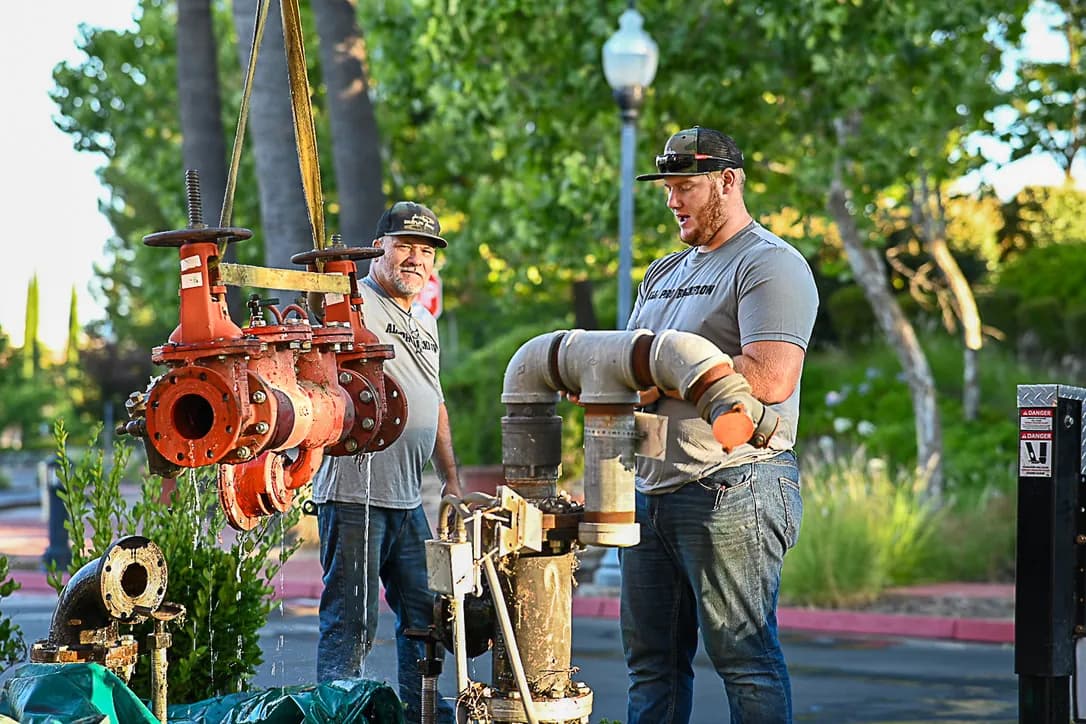
Backflow preventers come in several types, and the right one depends on the level of hazard at your property. Here's a plain-English breakdown of the most common assemblies.
Reduced Pressure Zone (RP / RPZ)
The RPZ is the highest level of protection. It uses two independent check valves plus a relief valve that dumps water if either check fails. Because it protects against the most dangerous (high-hazard) cross-connections, it's required for things like irrigation systems with chemical injection, industrial processes, and medical facilities.
- Best for: high-hazard applications
- Tell-tale sign: a relief valve port underneath that may occasionally discharge water
Double Check Valve Assembly (DCVA)
The double check uses two check valves in series. It's used for lower-hazard situations where backflow would be a nuisance rather than a health risk — like many fire lines and lower-risk irrigation systems.
- Best for: low-hazard applications
- Tell-tale sign: two test cocks, no relief valve discharge
Pressure Vacuum Breaker (PVB)
A PVB protects against back-siphonage only (not back-pressure) and is common on irrigation systems. It must be installed above the highest downstream outlet.
Which one do you need?
That's determined by your water purveyor's hazard assessment for your property — you generally can't substitute a lower-protection device for a required higher one. If you're not sure what you have or what's required, we can identify your assembly and confirm it meets your district's requirements.
We install, test, and repair all of these types. Learn about installation and testing, or call 916-276-7162.